General Results
Full visualisations for this section are available in the dedicated section:
General Results graphs and tables
2.1 Respondent profile
The survey collected 343 responses from professionals across 33 countries (Figure 1). Italy represented the largest group (38.8%), followed by Greece (13.7%), Germany (7.3%), Slovenia (7.0%), and Belgium (6.1%). Additional responses were received from several other European countries, as well as North America and Asia.
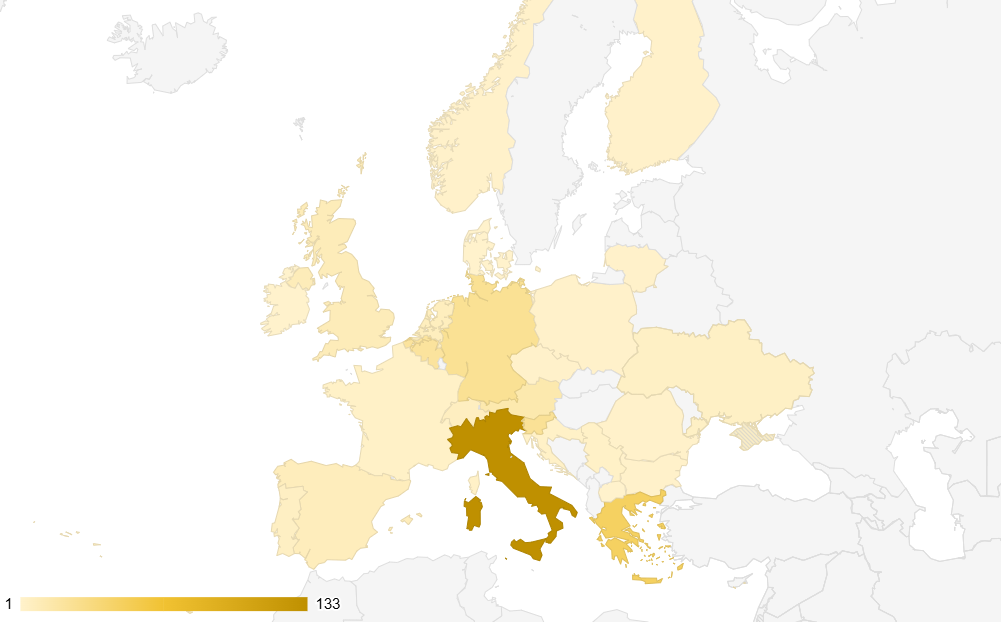
Figure 1. Geographic distribution.
The gender distribution was predominantly female, followed by male respondents, with a small share preferring not to disclose gender.
Most respondents were aged 35–44 (27.4%) or 45–54 (28.9%), with younger professionals (25–34) representing 22.2% and senior respondents (55+) 18.4%. Only 1.2% were under 25.
Educational levels were generally high: nearly half holding a PhD (47.8%), followed by Master’s degrees (39.1%) and Bachelor’s degrees (8.2%).
Respondents worked across diverse institutional settings. The largest groups came from universities (26.1%), research institutes (17.6%), public administration (16.6%), private companies (11.6%), and museums (10.4%).
Participants identified themselves across four broad professional domains:
- Conservation and Collection Care (28.3%)
- Research and Education (27.7%)
- Technical and Digital Innovation (27.4%)
- Administration and Management (16.6%)
Professional experience (Figure 2) varied: more than half (54.8%) had 8+ years of experience, followed by medium-career practitioners (4–8 years: 20.1%), early-career professionals (1–3 years: 16%), and newcomers (less than 1 year: 9%).
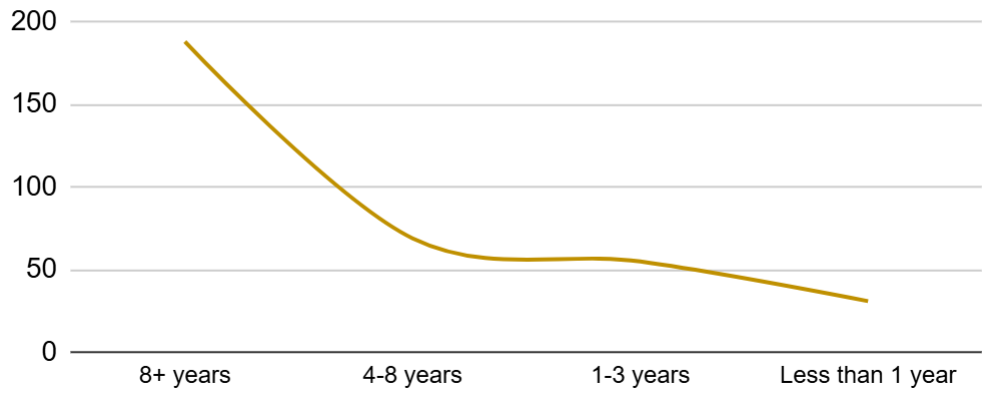
Figure 2. Professional experience.
2.2 Engagement indicators
A majority of respondents (61.2%) subscribed to the ARTEMIS newsletter. Interest in participating in pilot case studies was also significant, with 43% of respondents indicating preliminary willingness to be involved.
Regarding data sharing (Figure 3), 12.5% were open to sharing data without major restrictions, while 32% would share under specific conditions. A further 23% stated that willingness depends on the type of data involved. Only 6% reported that sharing was not possible due to legal or institutional constraints, while 25% were unsure or noted that the decision did not fall within their responsibilities.
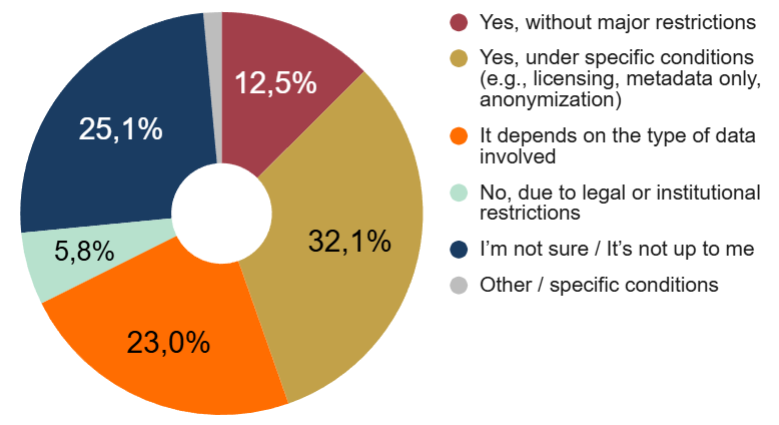
Figure 3. Willingness to share data.
Among respondents who expressed some level of willingness to share data and were therefore asked a follow-up question, 64.8% indicated interest in proposing a pilot case study within the ARTEMIS project, while 35.2% did not.