Museum educators / heritage interpreters
Full visualisations for this profile are available in the dedicated section:
Museum educators / heritage interpreters graphs
This profile includes 31 respondents. Museum educators and heritage interpreters in the survey present a digitally active profile, with most respondents relying on a wide range of tools for communication, storytelling, content creation and visitor engagement. Only a small minority reports not using digital tools at all.
3.6.1 Digital tools, content sources, and monitoring practices
Museum educators rely on a varied digital toolkit oriented toward communication, learning, and public engagement. The most commonly used technologies include online learning platforms, multimedia authoring tools, virtual tours, mobile engagement apps, and interactive displays. AR/VR and gamified applications appear in a smaller subset of cases. Only a minority reports not using digital tools at all.
Digital content is assembled from a wide mix of sources, including open–access repositories, institutional archives, in–house production, and collaborative partnerships.
Monitoring and documentation of visitor engagement follow similar patterns (Figure 22): respondents rely on multimedia editing environments, authoring platforms, online learning systems, collaborative content–creation tools, and – more selectively – analytics or survey platforms.
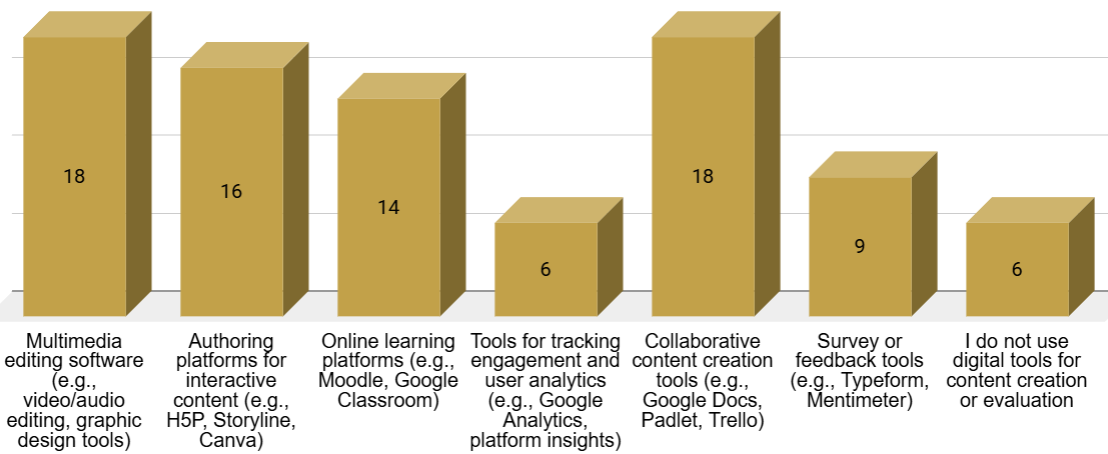
Figure 22. Tools or technologies used to create, manage or evaluate content.
The main challenges in evaluating the effectiveness of digital activities are structural rather than technical. Limited time and staffing are the most widespread constraints, followed by difficulties linking digital engagement to meaningful learning outcomes. Low or inconsistent user feedback and unclear evaluation criteria add further complexity, while a smaller group highlights the absence of suitable tools for systematic assessment. Only one respondent reports no major difficulties.
3.6.2 Types of data, formats, and standards
Museum educators work with an unusually diverse mix of digital content (Figure 23), combining images, videos, textual narratives, interactive media, and increasingly 3D reconstructions. The prominence of multimedia formats reflects the communicative and educational nature of their role, where visual and audiovisual material forms the core of public engagement. Interactive elements such as digital maps, timelines and gamified content are present but less widespread, and multilingual or inclusive resources remain limited to a smaller subset of practitioners.
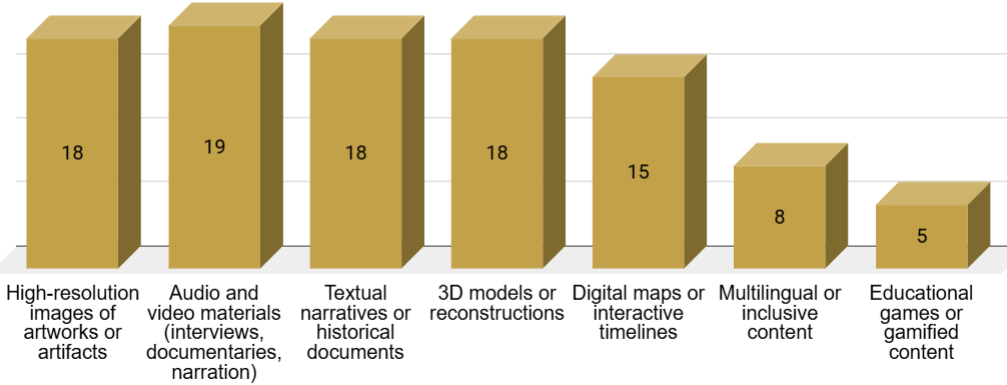
Figure 23. Types of data.
Most data are available in standard multimedia or document formats, while 3D models and interactive web–based formats appear less consistently. Structured educational standards such as SCORM or xAPI are essentially absent, indicating that learning technologies used in the heritage sector do not yet follow the conventions of formal e–learning environments.
In terms of protocols or standards, adoption is uneven. Some educators refer to metadata practices, accessibility guidelines or institutional policies, but a significant share does not use formal standards at all. This reflects a landscape where digital engagement is active and creative but not yet supported by consistent interoperability or long–term data management frameworks.
3.6.3 Data accessibility, collaboration, and sharing challenges
Museum educators distribute their digital content across a wide range of platforms, with a strong reliance on third–party services such as YouTube, Google Drive or Padlet, and frequent use of open–access portals or institutional CMS systems. Only a minority works within fully structured or institutionally managed environments, while local storage remains very common – reflecting workflows that are decentralised and often individually maintained rather than integrated into unified institutional systems.
Collaboration practices are equally varied: external platforms are the most widely adopted, whereas internal systems are used by a smaller group. Interest in collaborative tools remains high among those not yet using them, indicating an unmet demand for shared digital workspaces.
Difficulties in sharing content arise mainly from institutional constraints and infrastructural gaps. Respondents cite approval processes, licensing uncertainties, limited open–access infrastructure, and incompatibilities between platforms and formats. Low interdepartmental collaboration emerges as the most widespread barrier, underlining the fragmented nature of digital practice across educational and communication roles.
3.6.4 3D models, simulations, and integration challenges
Museum educators show a balanced level of engagement with advanced digital tools. Around one–third use 3D models or digital simulations frequently, while another substantial share engages with them occasionally or expresses interest in adopting them. Only a small minority does not perceive these technologies as relevant to their work, indicating broad openness toward immersive and interactive formats.
However, the integration of these tools into everyday practice is hindered by structural constraints rather than conceptual resistance. The most widespread barrier is the lack of time and resources needed to develop digital content, followed closely by gaps in training and digital skills. Technical complexity and reliability issues also affect a significant portion of respondents, while institutional or collegial resistance appears less common but still present. A smaller group highlights the difficulty of engaging certain audiences through digital media, suggesting that educational goals, rather than technological ones, can also shape adoption.
3.6.5 Perceived value and future role of Digital Twins
Museum educators express strong interest in Digital Twins (Figure 24) as tools for enhancing interpretation, accessibility, and audience engagement. The most widely endorsed applications focus on storytelling and immersive learning experiences, including virtual tours, simulations, and contextualised narratives supported by real–time or historical data. Many also see Digital Twins as a way to make fragile or inaccessible heritage available to wider audiences, as well as an opportunity to strengthen collaboration with curators and other specialists.
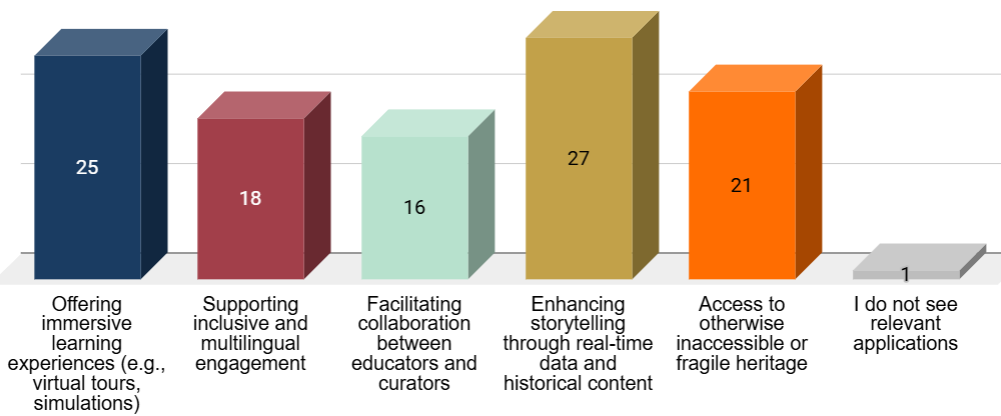
Figure 24. Areas where Digital Twin are considered most useful.
Expectations for Reactive Digital Twins emphasise dynamic, interpretable content rather than purely technical information. Respondents prioritise real–time contextual data, narrative integration, predictive visualisations, and simulation–based explanations of historical change. Alerts or automated updates are considered less central but still relevant for some.
Looking ahead, most educators anticipate that Digital Twins will play an increasingly important role in museum education, though some expect adoption to remain context–dependent due to resource constraints. Only a small minority foresees minimal or no impact, underscoring a generally positive outlook tempered by realistic awareness of institutional limitations.
3.6.6 Cross analysis insights
All detailed cross–tabulations for this profile are available in the corresponding section:
Museum educators / heritage interpreters tables
These insights derive from comparative cross-tabulations across the profile-specific tables. The analysis focuses on relative response distributions within each row to identify structural patterns across technological groups, rather than relying on absolute counts.
- Museum educators rely on multimedia and interactive tools (Figure 25), with authoring platforms, online learning environments, and high–resolution imagery forming the core of their ecosystems. Data types and formats reflect this integrative workflow, privileging multimedia and presentation formats while making limited use of highly structured or scientific data infrastructures.
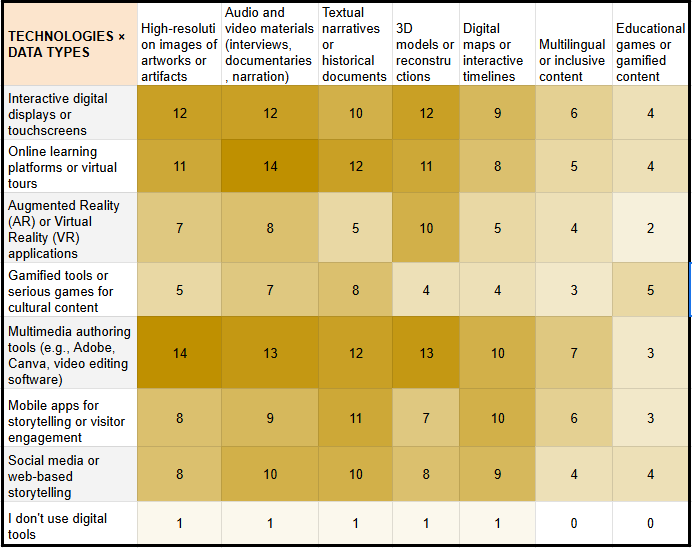
Figure 25. Cross-tabulation (digital tools and technologies vs. data types).
-
Creation workflows are strong, but evaluation practices remain fragile. High levels of difficulty are consistently reported in linking engagement to learning outcomes, establishing reliable evaluation criteria, and dedicating time or staff to systematic assessment. No digital tool class shows reduced challenges, indicating a systemic issue rather than a tool–specific one.
-
Across all data types, multimedia and presentation formats clearly dominate, while interactive and structured educational standards (e.g., SCORM, xAPI) remain marginal. Even 3D models are frequently distributed in static or presentation-based formats, indicating content-rich but weakly standardised digital practices.
-
Integration challenges for both 3D models and simulations (Figure 26) are primarily operational, centred on limited time, resources, and digital skills, with technical complexity emerging particularly among occasional users. Resistance or institutional opposition plays a comparatively minor role.
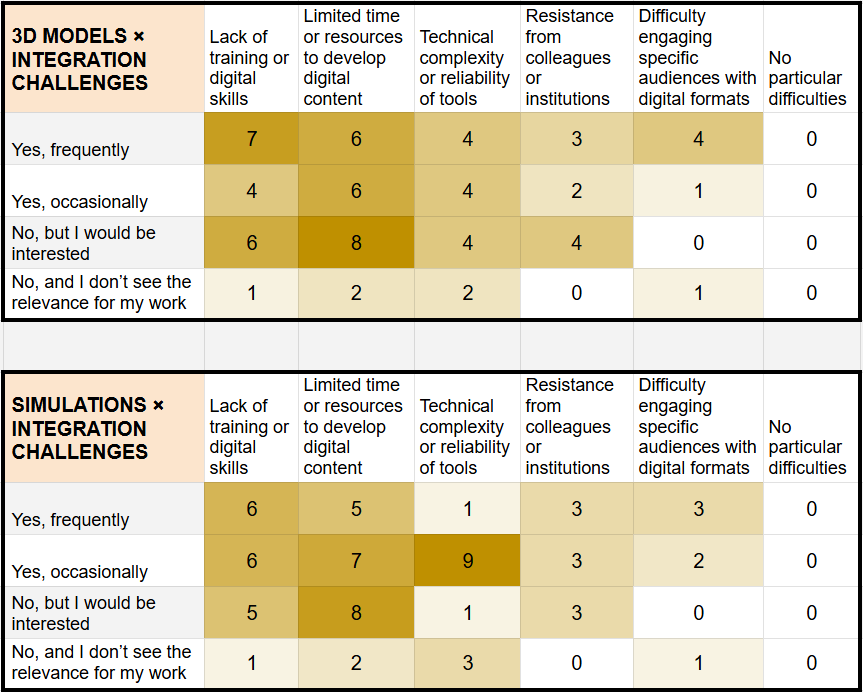
Figure 26. Cross-tabulation (use of 3d models and simulation vs. data integration challenges).