Data organisation, sharing practices and challenges
5.3 Data organisation, sharing practices and challenges
Across profiles, this block shows that data organisation is one of the most uneven dimensions of the entire survey. While some roles operate within structured, searchable systems, others still rely on scattered files, legacy documents, or partially digitised resources. As in the previous block, each professional group remains enclosed within its own organisational environment, and very few institutions achieve a unified data layer capable of supporting cross–department workflows.
Two transversal tendencies emerge.
-
First, structured and interoperable datasets concentrate almost exclusively in data–management roles, while most other profiles operate in fragmented environments where partial digitisation is the norm rather than the exception.
-
Second, there is a marked gap between the widespread interest in collaborative platforms and their uneven adoption in practice, suggesting that institutional infrastructure lags behind users’ willingness to collaborate.
Collaboration practices reinforce this picture of fragmentation. Humanities–oriented roles tend to rely more on external or open–source systems, whereas technical or collection–focused profiles privilege internal platforms. The result is a patchwork of tools that coexist without forming a shared organisational infrastructure.
The challenges in sharing data and resources (Figure 49) confirm this structural divide.
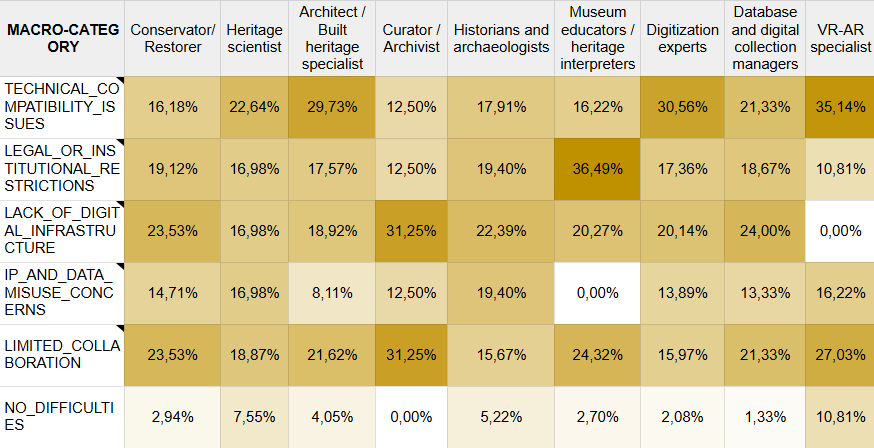
Figure 49. Main challenges in sharing data and resources.
Technical compatibility issues and insufficient digital infrastructure affect nearly all profiles, but with different consequences: collection–based roles face institutional and organisational constraints, while technical roles confront interoperability and tool–integration limitations rooted in complex workflows. No challenge is universal, yet none is isolated either, highlighting a sector–wide misalignment between digital ambitions and institutional capacity.
In short, this block shows that the difficulty is not producing or managing data, but aligning the organisational environments in which data live. Institutions may hold significant digital resources, yet the absence of shared infrastructures means that these assets rarely circulate smoothly across roles.