4. Training needs and preferences
Full visualisations are available in the dedicated section:
Training needs and preferences graphs and tables
4.1 Overall interest in ARTEMIS training
A total of 343 respondents answered the question about their interest in participating in ARTEMIS training activities. The distribution is as follows:
-
167 respondents (48.7%) – Maybe, it depends on the content and format.
This represents the largest group: people potentially interested but waiting to understand relevance, scope, and effort required. -
136 respondents (39.7%) – Yes, I would like to receive more information and apply.
This group shows clear and proactive interest in taking part in ARTEMIS training. -
40 respondents (11.7%) – No, I am not interested.
A minority not currently looking for training opportunities.
Overall, the majority of respondents fall into the “yes” or “maybe” categories, confirming that training is a broadly appealing component of the ARTEMIS ecosystem.
4.2 Preferred formats for training
Respondents express diverse preferences regarding the format of potential ARTEMIS training. The distribution is as follows (Figure 43):
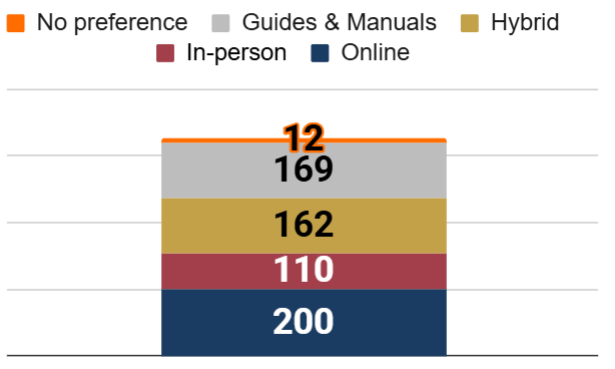
Figure 43. Preferred format.
-
200 respondents (58.3%) – Online training (webinars, e–learning courses).
This is the most preferred option, reflecting the need for flexible and accessible learning pathways. -
169 respondents (49.3%) – Practical guides and downloadable manuals.
A nearly equally large group values self–paced, application–oriented materials that can be reused in daily work. -
162 respondents (47.2%) – Hybrid training (part online, part in–person).
Interest in mixed formats suggests that combining online components with targeted hands–on sessions appeals to a significant portion of the audience. -
110 respondents (32.1%) – In–person workshops with practical sessions.
A substantial number still values physical, hands–on learning experiences, although less than the online or hybrid formats. -
12 respondents (3.5%) – No preference.
This small group is open to any modality.
Overall, the results indicate that training should prioritise online accessibility, supported by hybrid options and practical manuals, with in–person workshops offered selectively depending on resources and context.
4.3 Familiarity with existing learning platforms
Familiarity with established learning platforms is uneven (Figure 44). Europeana Pro is by far the most recognised resource, known by 128 respondents (37.3%), followed at a distance by DARIAH Campus (69 respondents, 20.1%) and ARIADNEplus Training Hub (68 respondents, 19.8%). Other platforms such as Programming Historian, CARARE, OER Commons, Coursera or Moodle register much lower levels of awareness, each below 11%.
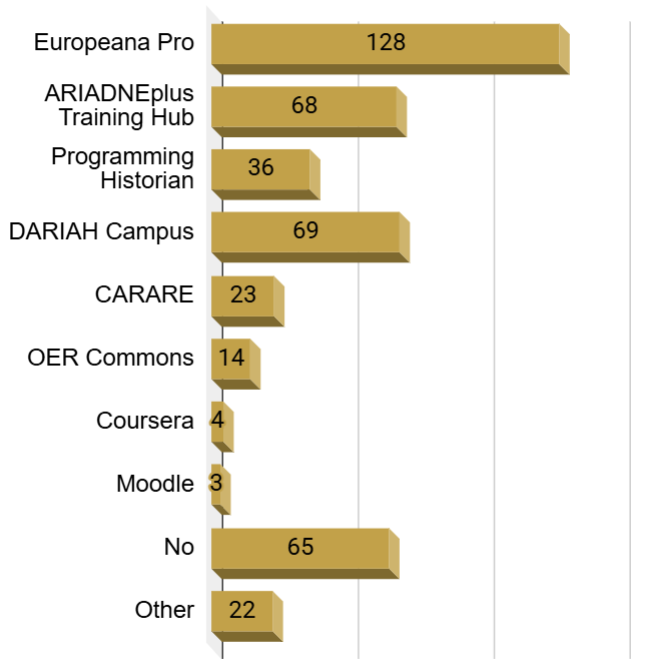
Figure 44. Learning platform familiarity.
A notable 65 respondents (18.9%) report no familiarity with any of the listed platforms, confirming that a significant part of the community has limited exposure to structured online learning environments.
Overall, recognition is concentrated around a very small number of platforms, while the majority remain marginal. This indicates that ARTEMIS training should not assume prior knowledge of external learning hubs and may need to provide orientation or onboarding resources when referring to them.
4.4 Working languages
A total of 298 respondents indicated their main working language. The distribution shows a highly multilingual community. English is the most common working language, selected by 101 respondents (33.9%), followed closely by Italian with 95 respondents (31.9%). Other languages with smaller yet meaningful groups include Greek (26 respondents, 8.7%), German (25 respondents, 8.4%), and Slovene (17 respondents, 5.7%). All remaining languages appear with very small frequencies – typically between one and six respondents each – forming a long tail of isolated cases distributed across Europe.
This distribution suggests that English should serve as the primary training language, while Italian and Greek merit consideration for additional support where resources allow. For the many smaller language groups, accessibility is best ensured through subtitles, multilingual documentation, and translated materials, rather than dedicated parallel–language training tracks.
4.5 Familiarity and Interest in Digital Skills
Respondents evaluated their familiarity with eleven digital topics and then indicated their interest in receiving training on the same areas. The combined results reveal a clear pattern: familiarity is generally low, while interest in training is significantly higher – especially in the areas that align most closely with the ARTEMIS mission (Figure 45).
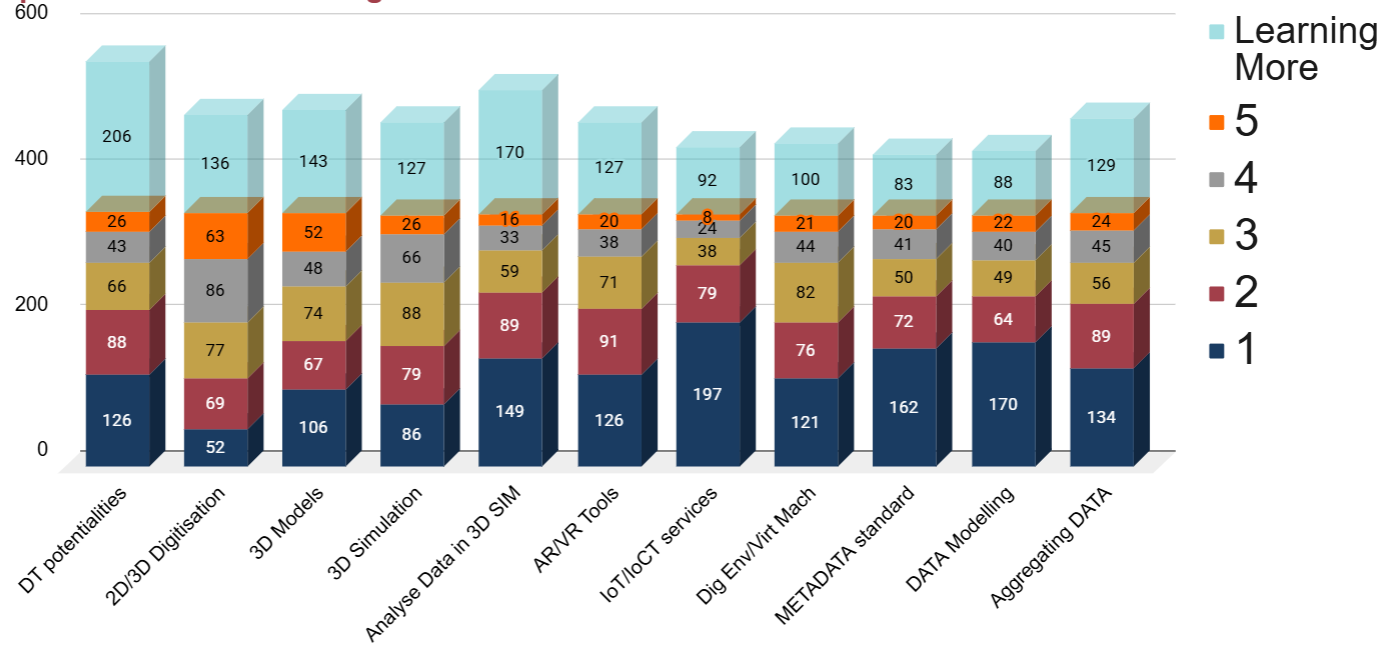
Figure 45. Familiarity with selected topics vs. Interest in learning more.
-
Across the board, familiarity with advanced topics such as metadata standards, semantic modelling, data aggregation, analysis of 3D simulations, IoT/IoCT services, and Digital Twin potentialities remains limited, with 40–70% of respondents placing themselves at levels 1–2. Even in more established areas like 2D/3D digitisation or 3D modelling, high familiarity (levels 4–5) is far from widespread.
-
Training interest, however, tells a different story. Respondents show strong motivation to upskill, especially in domains that support integrated, interpretive, or simulation–based workflows. The most requested topics are Digital Twins (206 interested respondents), analysis of 3D simulations (170), 3D modelling (143), 2D/3D digitisation (136), AR/VR tools (127), and data aggregation (129).
-
In contrast, IoT/IoCT services – despite being the area with the lowest familiarity – generate low relative interest (92), suggesting that sensor–based infrastructures are not yet perceived as a priority.
-
A key observation for ARTEMIS is that Digital Twins receive the highest level of interest across all topics, indicating that the survey’s audience is both receptive to and curious about the core themes of the project. This confirms a strong alignment between the project's focus and the expectations of the community reached.
Overall, the results point to a community eager to develop new skills – particularly those that enhance interoperability, modelling, and the meaningful use of complex datasets – while being less inclined toward purely infrastructural or sensor–oriented technologies.
4.6 Expected Application of Training
Respondents expect to apply new skills in ways that directly affect their professional practice. The most common intention is to integrate new technologies into current or future projects (234 respondents), followed by improving research and analysis methodologies (194). Training is also seen as a multiplier: 119 respondents intend to transfer what they learn to colleagues or students, while 180 plan to use new competencies to support collaborations with other institutions. Overall, participants view training as a driver of both individual improvement and broader organisational development.
4.7 Cross–profile Insights Based on Functional Roles
The cross–analysis of training data by functional role highlights clear differences in both existing competencies and training expectations across the surveyed professional groups. Education levels vary significantly among roles, with heritage scientists and historians/archaeologists showing the highest proportion of respondents holding a PhD degree, while museum educators, digitization experts and administrative staff present more diverse educational backgrounds. These patterns help explain, at least in part, the distinct familiarity levels observed across digital topics.
Average familiarity scores confirm strong role–specific orientations (Figure 46). Digitisation experts and VR/AR specialists show the highest confidence in advanced 3D workflows, immersive tools and simulation environments, while database and digital collection managers exhibit the strongest familiarity with metadata standards, semantic modelling and data aggregation. By contrast, conservators, curators and archivists display notably lower familiarity across most topics, particularly in areas such as Digital Twins, semantic modelling, and simulation analysis. Architects, built–heritage specialists and historians occupy an intermediate position: they use a wide array of digital tools but show uneven familiarity with specialised data–integration or semantic frameworks.
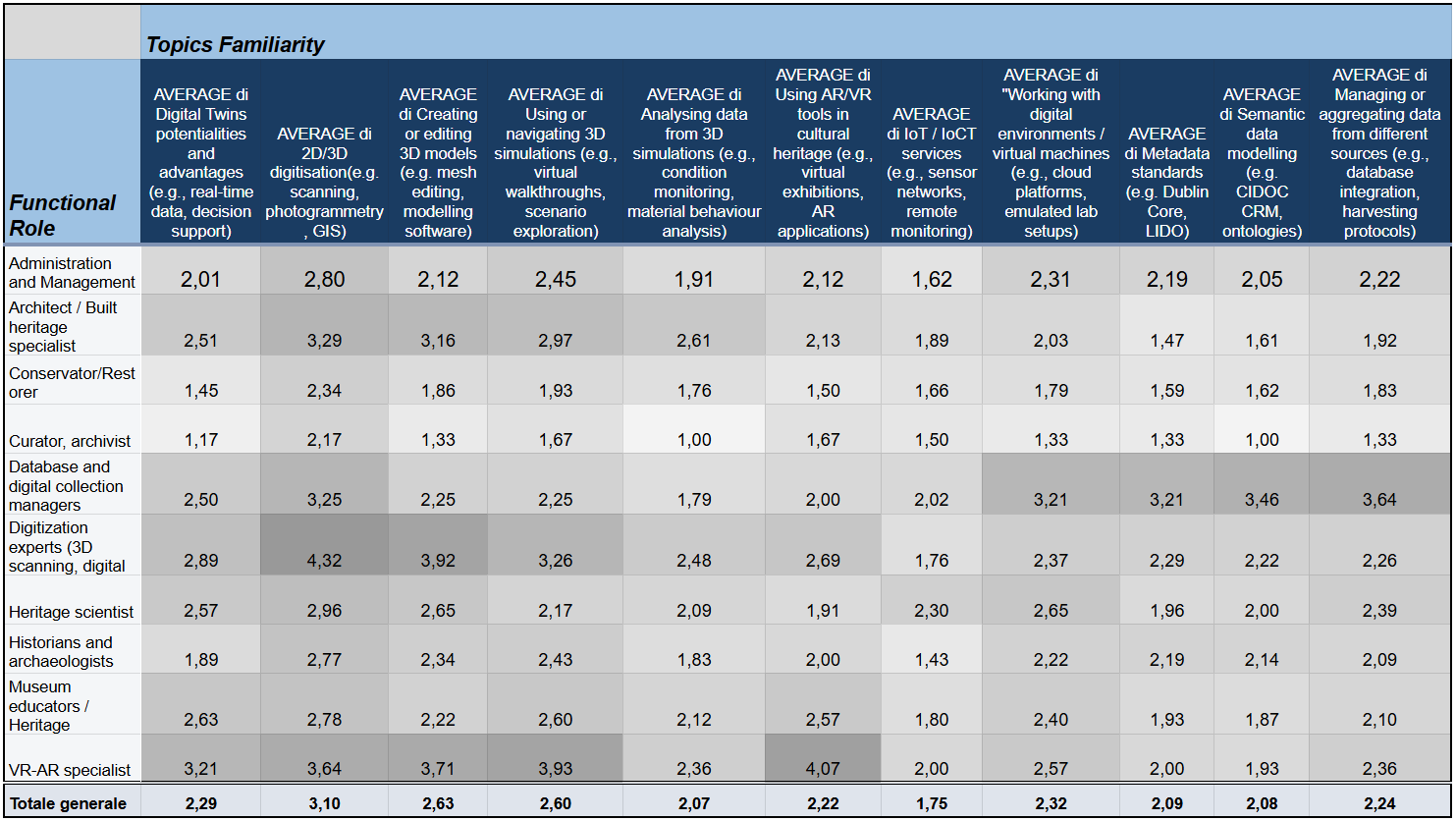
Figure 46. Functional role vs. topics familiarity
Interest in training mirrors these differences but also reveals points of convergence. Digital Twins attract consistently high interest across almost all profiles, confirming broad curiosity and strong alignment with ARTEMIS objectives. Demand for training in 3D modelling, digitisation, and simulation is especially high among architects, historians, educators, VR/AR specialists and digitization experts. Skills linked to metadata standards, semantic modelling and data aggregation generate substantial interest mainly among database managers and, to a lesser extent, among roles engaged in research–oriented workflows. IoT/IoCT services show comparatively low interest across nearly all groups, confirming what we already said that sensor–based infrastructures are not yet perceived as a priority unless directly tied to modelling or interpretive tasks.
Overall, the cross–profile analysis shows that training needs are both sector–specific and complementary. While some groups require foundational support in data structuring and interoperability, others seek advanced competencies in 3D modelling, immersive tools or simulation–based analysis. The widespread interest in Digital Twins indicates shared momentum across diverse professional communities, despite uneven starting points.