Heritage Scientists
Full visualisations for this profile are available in the dedicated section:
A total of 23 respondents identified themselves as Heritage Scientists. Heritage Scientists represent one of the most technically specialised groups in the survey, working at the intersection of analytical science, diagnostics, and material study. Their activities focus on laboratory and in situ investigations, instrument-based measurements, advanced imaging, and the interpretation of complex datasets. This profile includes professionals operating in research institutes, university laboratories, and heritage science units, typically involved in material characterisation, monitoring, degradation studies, and diagnostic support for conservation.
3.2.1 Digital tools, real-time data, and monitoring practices
Heritage Scientists make extensive use of analytical and diagnostic tools, particularly multispectral imaging, digital microscopy, spectroscopy, and portable instruments for in-situ analysis. Scientific data analysis software, environmental sensors, and 3D or photogrammetry tools are also common, while continuous real-time acquisition remains limited to a subset of respondents.
Scientific condition monitoring practices (Figure 10) vary widely, combining environmental sensors, remote sensing platforms, and scientific data loggers, although a notable share does not use digital monitoring tools at all.
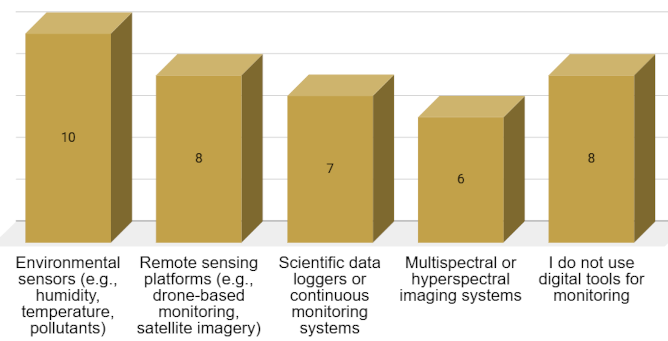
Figure 10. Digital tools or technologies used to monitor conditions.
The main challenges in monitoring conditions relate to the high cost of equipment and the complexity of interpreting scientific data, followed by integration issues, and difficulties linking measurements to conservation needs.
3.2.2 Data types, formats, and standards
Heritage Scientists work with a diverse landscape of scientific data, ranging from spectroscopic and imaging datasets to environmental measurements, microscopy results, and stratigraphic or chemical analyses. Historical documentation of previous studies is also widely used, reflecting long-term research continuity.
Data are stored (Figure 11) across multiple formats: tabular files and scientific image formats are the most common, while spectral formats, proprietary software outputs, and 3D models are also well represented.
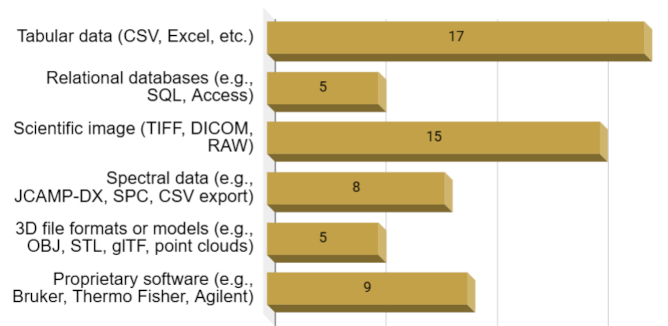
Figure 11. Data format.
Despite this diversity, the adoption of standards remains limited. A minority uses frameworks such as CIDOC CRM, IIIF, or persistent identifiers (DOI/ARK), while many respondents report working without specific protocols for data management or interoperability.
3.2.3 Data accessibility, collaborative platforms, and sharing challenges
Data accessibility (Figure 12) among Heritage Scientists is uneven: some work within structured and searchable systems, while many rely on datasets that are scattered across multiple repositories or only partially digitised.
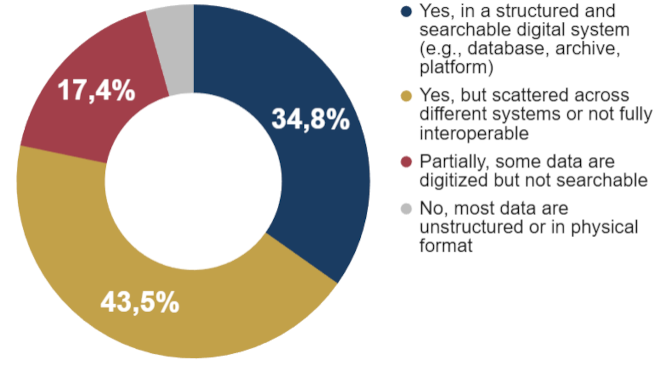
Figure 12. Data structure and accessibility.
Collaborative platforms are used primarily within institutional environments, with a smaller group adopting external or open-source solutions; several respondents express interest in adopting such tools, while very few dismiss their usefulness.
Sharing scientific data remains challenging, especially due to compatibility issues between software and formats, legal or institutional restrictions, and concerns around intellectual property or misuse. Additional barriers include limited collaboration with other professional groups and the lack of adequate digital infrastructure, whereas only a minority reports no significant difficulties.
3.2.4 3D models, digital simulations, and integration challenges
The use of 3D models among Heritage Scientists is relatively widespread, with respondents split between frequent and occasional use, while a similar number would be interested in adopting them in the future. Digital simulations are less common, but interest is clearly present, indicating room for broader uptake if tools become more accessible.
Integration of digital technologies into scientific workflows remains challenging: high equipment and software costs, low interoperability, and limited institutional support represent the most significant obstacles. Additional difficulties include a lack of training opportunities, resistance to adopting digital practices, and the need to adapt established laboratory procedures to new methods. Only a small minority reports no significant challenges.
3.2.5 Digital Twin applications, expected data, and future perspectives
Heritage Scientists express strong interest in Digital Twins, particularly for scientific visualisation, comparative analysis, preventive conservation planning, and material degradation modelling. Data integration from multiple diagnostic sources and training applications are also seen as highly relevant, while only one respondent sees no useful application.
Expectations for a Reactive Digital Twin (Figure 13) focus on accessing high-resolution diagnostic imaging, environmental sensor data, integrated datasets from past research, and predictive simulations of deterioration, alongside tools for virtual testing of conservation treatments.
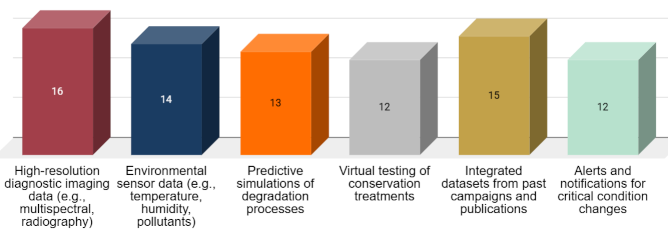
Figure 13. Information or support expected from Reactive Digital Twins.
Looking ahead, views are mixed: some anticipate that Digital Twins will become essential for preventive conservation and scientific study, while others foresee usefulness limited to specific contexts or constrained by cost and complexity; none consider them irrelevant, though a small group remains uncertain.
3.2.6 Cross-analysis insights
All detailed cross-tabulations for this profile are available in the corresponding section:
Heritage Scientists graphs tables
These insights derive from comparative cross-tabulations across the profile-specific tables. The analysis focuses on relative response distributions within each row to identify structural patterns across technological groups, rather than relying on absolute counts.
-
Respondents interested in adopting simulations place relatively greater emphasis on predictive modelling and integrated datasets compared to current users, highlighting a forward-looking demand for system-level Digital Twin functionalities. In contrast, current users distribute their expectations more evenly across multiple support components.
-
Perceived integration challenges vary by adoption level. Frequent 3D users emphasise interoperability and institutional support constraints, whereas non-users who express interest highlight cost and infrastructural barriers. Those who do not perceive 3D as relevant report few technical challenges, suggesting that perceived irrelevance rather than operational difficulty shapes non-adoption in this group.
-
The relationship between platform adoption and data-sharing challenges is nuanced. Users of collaborative platforms continue to report compatibility, legal and infrastructural barriers, and the distribution of reported difficulties does not differ structurally from that of non-users. Platform adoption therefore appears insufficient, on its own, to resolve systemic sharing constraints.
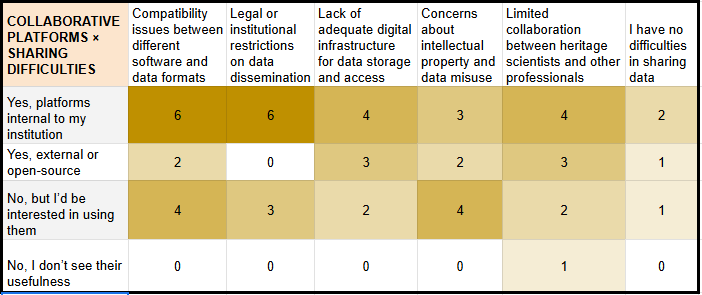
Figure 14. Cross-tabulation (collaborative platform use vs. sharing challenges).
- Spectroscopy techniques, digital microscopy and portable instruments form a tightly interconnected analytical cluster (Figure 15), characterised by similar data-type distributions. In contrast, 3D tools and environmental sensors display structurally distinct data profiles, indicating functional specialisation rather than hierarchy.
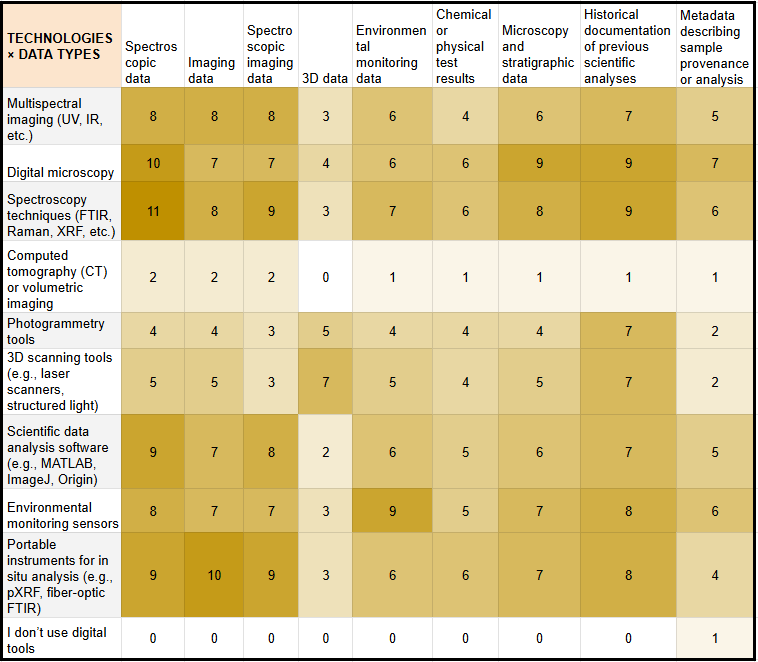
Figure 15. Cross-tabulation (digital tools or technologies vs. data types).
-
Monitoring-related challenges vary significantly by tool type. Environmental sensors and remote sensing platforms show relatively higher associations with cost, integration issues, and difficulty linking data to conservation needs, whereas multispectral systems are more frequently linked to interpretation complexity. This suggests differentiated operational constraints rather than a uniform barrier across monitoring technologies.
-
Real-time data generation remains strongly concentrated in environmental monitoring sensors. Most diagnostic and imaging technologies are predominantly used in manual or post-processed workflows, indicating that continuous data acquisition is not yet structurally embedded across the broader heritage science toolkit.